
I think it was in Edward Hirsch’s book How to Read a Poem that I first learned about Czeslaw Milosz. And I think his name appeared in a chapter about Eastern European poets who wrote during and after World War Two. After hearing Milosz’s name and seeing a poem or two in Hirsch’s book, I was drawn to the richness of his metaphors, the sharpness of his insight. The fearful backdrop of his particular time and place in Europe also attracted me because I feel that many people who grew up, who came to their world view and their view of human nature in places like Poland in the 30s, 40s, and 50s,–these people have a deeper understanding, a more immediate and visceral understanding of the light and dark sides of human beings than I do. I respect this background of Milosz, and just as much, I have come to appreciate his ability to pull me through my ignorance to a small knowledge of what he, and others like him, thought, did, and felt. These are some of the first reasons I started exploring more of his poems. Add to this initial reading my growing interest in memoirs, especially those of writers. I can’t help but think of Elie Wiesel here because the first part of his book Night memorably describes the almost-overwhelming challenge he faced in trying to find words for his experience on trains and in concentration camps. He says he had to work hard to locate the right language to do some kind of justice to, to make expressible the almost unimaginable pain and grief he faced with his family and alone. His challenge, in turn, reminds me of Seamus Heaney’s introduction to his translation of Beowulf. In one part of the introduction, he describes his struggle to find the best way to wrestle with his Anglo and Celtic heritages. He would not, could not start the translation project, until he found the most effective way to bring his full historical self to the phasing of his translation. When he finally reaches this point of satisfaction, he writes–and this quote sits atop the entrance to my classroom: “my heart lifted again, the world widened, something was furthered.”
So, my interest in writers who find the right words has apparently been building for some time. As I read this edited collection of Milosz’s essays, I will watch for those special moments when the words he chooses, and the order in which he puts them, open a window for me onto his particular hopes and fears. His experience has been very different from mine, and I look forward to learning how different.
____
This is the first of four blog posts about a collection of Czeslaw Milosz’s essays entitled To Begin Where I Am, edited and with an introduction by Bogdana Carpenter and Madeline G. Levine. I am reading this book alongside high school seniors in my classes who each have chosen their own biography, autobiography, or memoir. Technically, my chosen book fits none of these labels, but (I hope) I have clearly communicated to my students their freedom to blur some lines in choosing a book about a person who truly interests them. During the course of their reading, students will publish weekly posts, starting with Monday April 9 and continuing with a new post each of the next Mondays in the month. I will do my best to publish one ahead of their schedule, to help guide those who want some guidance. The writing above is my first about the book of Milosz’s essays.
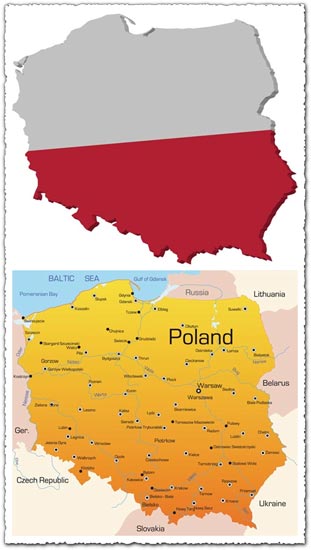
map credit: https://www.vector-eps.com/poland-vector-maps/

 During a recent senior class, I was reminded of the value of play. In lieu of viewing some films, I decided that student troupes would rehearse the opening of Hamlet. And I’m glad I did. The troupes traveled to nearby areas outside of the classroom, in order to prepare the initial fifty-one lines. This was the very first time we all held these books in our hands, and the players paid memorable tribute to the riches in the text. Plus they had fun. One group decided to go outside, using a patio’s walls as Elsinore’s battlements. When I went out to check on them, I saw three of the boys tilted back in their chairs with feet up on the table. As I approached, ready to reprimand, the ghost suddenly drifted into view from upstage right with someone’s blanket draped over her head. The boy actors fumbled in fear to escape the ghost. Then I realized that I wasn’t catching them goofing off, but was watching their rehearsal. On the way back to the classroom, when I explained my first thought and subsequent realization, one boy actor exclaimed, “That’s how good we are as actors.” Indeed. Another troupe made an artistic choice that stayed private until one of the players delivered their prologue. Given the appearance of a ghost, they set their scene in Charleston, South Carolina–known for its heavy ghost traffic. All the players spoke in dialects of the region, lending a special resonance to particular lines and to the scene as a whole. One girl player, after the performance, when I asked if she had grown up in Charleston, replied that her father had. From her first lines, her accent rang as true as any in the group. Each of those players had her or his own version of the regional dialect, which reminds me of Shakespeare’s many voices. Speaking of dialects, yet another troupe had a boy player who relished the chance to tour the English-speaking world with his performance. I don’t remember which character he played, but I clearly recall that across the span of his lines he guided us from London to Cork to Johannesburg and finally to Sydney. In other words, whether consciously or as an accidental linguistic tourist, he entertained us with his expressive exploration. In all, we had fun while playing. I was nervous, as I often am, when we hit day one of our study of this most majestic of plays. These seniors reminded me to trust the power of this text, and to trust them to have fun. It was the final day of Winterfest at school, and what better way to enjoy the day. Such moments convince me, if I needed convincing, that with a bit of guidance about theatrical tools like speech, movement and props or costumes, and with clear encouragement to have fun interpreting and inventing, students come away from the experience having learned these opening lines at a visceral, bodily, emotional level. They heard and responded to lines much more than if they had watched someone else, like Olivier or Jacobi, render those same lines.

 maroonballoon