discovering feedback

This is a small discovery–realization really.  It is also a large discovery–a revelation that makes a large “chink” sound, as a few more pieces fall into place.

My students recently drafted poems–sonnets or odes.  They submitted them to TURNITIN.COM, which we have been using all year.  The site allows voice comments, which I have occasionally used for student paragraphs and essays.

For several reasons, which I will describe later, I realized the voice comment feature allows me to first read the poem to the student, before giving suggestions.  I let the students hear their poems from another voice, while I meet and start to know that poem.

Some years ago, my wife described the part of teaching that watches performance and tells the child that we are watching.  Certainly we give tips on how to improve performance, but we need to remember the value of simply watching and being there with them.  The familiarity, knowledge and love that develop as we do this means something for us and the students.

It’s like watching the child who, while standing on the edge of the diving board, calls out, “Mommy, watch me, watch me.”  We call back, “OK, I’m watching.”  Reading their poems back to them with this technology is like this.  I am happy and energized to make the discovery.  The process looks simple, but the results feel like more than that.

1 Comment

Filed under creative solutions

As seniors near the end of HAMLET, I offered them these thoughts. The initial inspiration came from the NYTimes obituary for Chinua Achebe.

bllbrwn423's avatarENG 12H

achebe. newsday.com“Be true to the story,” remarks the main character in N. Scott Momaday’s novel, The Ancient Child.  He is an artist from whose paintings a mysterious figure begins to emerge over time.  The features of this apparition make it bear-like, and the painter must stay true to the story of this bear’s surfacing.  He fights to face the bear, as unsettling as this struggle might be.

I was reminded of Momaday’s novel, while reading yesterday’s obituary of Nigerian writer, Chinua Achebe, whose novel, Things Fall Apart, has made, and keeps making, a remarkable global impact since its publication in 1958.  This obituary includes John Updike’s  assessment that Achebe “grabbed the subject of colonialism ‘so firmly and fairly’ that the book’s tragedy, like Greek tragedy, felt tonic; a space had been cleared, an understanding had been achieved, a new beginning was implied” (NYTimes, 23 Mar 2013: A14).  Updike’s…

View original post 300 more words

Leave a comment

Filed under creative solutions

This inspiring example of learning also shows me creative ways to shape blog posts.

Steve Goldberg's avatarWhat I Learned Today

Here’s a great example of how a news article we might read in the morning at TLC Middle School can be used as a springboard to learn in a truly multi-disciplinary way.

Let’s look at this recent NPR feature about grapes, which caught my attention both with the picture and the clever headline:

npr grapes

At TLC Middle School, here’s how we might discuss this article.

First, we would all read the NPR article (go ahead and read it — it’s not long).

The article describes how one part of plants work:

Plants have two types of pipes in their stems: the xylem and the phloem. The xylem pumps water to the leaves from the roots, while the phloem sends food from the leaves back down to the roots.

After we read that, I’m pretty sure we could find an image of xylem and phloem from an online biology text…  Yep —…

View original post 938 more words

Leave a comment

Filed under creative solutions

Is this cheating?

IS THIS CHEATING?

Students are returning from vacation, and I have imagined a “real-world” writing assignment.  Although this outline represents my draft thoughts, I am leaning towards using it as a welcome-back exercise–in an attempt to  have the departing seniors (a) write with meaningful purpose and (b) play a significant role in designing our experimental “biography unit.”  Is it cheating to have them spend time writing such an essay?  I don’t think so, but thought it would be fun to ask colleagues and other readers.

Incidentally–don’t tell the students–the “list” they will pick up comes from Tony Wagner’s recent writings.  I won’t name which ones, in case some students are closely following this personal blog.  (A number of them subscribe to our course blog.)

bllbrwn423's avatarENG 12H

DRAFT LESSON PLAN reflection

List seven basic skills you will take away from your high school experience.

Pick up list of seven skills identified by recent book on the issue.

Reflect on similarities and differences between these two lists.  For example, what do these patterns mean about your past and future formal schooling?

Use these reflections to write an essay that follows this format:

intro to main idea

most exercised skill in this class

least exercised skill in this class

implications for design of upcoming “biography unit”

concluding thought, which offers insight gained from preceding analysis

(due to TURNITIN by end of this week’s block class; include amended pledge, which acknowledges, for example, conversations with classmates)

View original post

Leave a comment

Filed under challenge, creative solutions, discovery, reasons for writing

Do we really need poetry?

In several of today’s classes–two sophomore and one senior–we listened to the NPR piece about John Borling’s book of poems, Taps on the Walls.  Having heard this interview during my drive to work this morning, I wanted to share it with students, and hence with readers of this blog.  It is a remarkable answer to a question I have asked my poetry classes in the past:  do we really need poetry.

After students listened to the program, which I recommend you do (7’48” long), we literally tried our hands at composing with the code used by Major General Borling and his prison mates.  Since the sophomores are just finishing The Kite Runner, I asked them to start a poem in the voice of Amir–a poem expressing what Sohrab means to him.  Then they were to try tapping the first line of this poem for their neighbor, as one concrete way to appreciate the importance of poetry for Mr. Borling during his six and a half years of brutal captivity. You can catch a glimpse of their handiwork on the youtube video above. I hope this mini-lesson opens for them a small window on the remarkable human spirit and its need for artistic expression.

p.s. Apologies for the extra youtube videos; I am trying to learn how to post just the one video I made, without these extraneous, unendorsed connections.

2 Comments

Filed under art, challenge, creative solutions, expression, reasons for writing

Hamlet’s facets, posing questions

The seniors recently wrote about Hamlet, at the end of Act Two.   My wife remarked that the instructions modeled my thinking to these students, so I decided to share those instructions here.  The text of their assignment below reminds me of work with Project Zero and the idea of “making thinking visible.”  (In this case, my thinking becomes visible.) I have pasted the students’ instructions underneath this sentence; afterwards, I reflect on this approach to generating a question.

ASSIGNMENT

Hamlet Writing, after Act 2

Choose three separate lines or brief sets of lines from Hamlet’s soliloquy (2.2.501-558) that support your answer to the question below*.  Following the “11-sentence” model, use these chosen quotations in your paragraph.

Hamlet mixes feelings of superiority—for example, through his confidence in manipulating people’s perceptions of him—with an apparently uncontrollable emotional side that is overwhelmed with grief.  In sum, he feels above everyone else and overwhelmed—that is, in control and out of control.

*What light does his soliloquy shed on the tension between these two sides of Hamlet’s character?

(State your main idea with some version of this basic structure: “the speech reveals that . . . .”)

Summary of sample student interests in Hamlet’s character

Depressed

Determined, willful; passionate; extreme; takes risks

Sense of duty; loyalty

Manipulates people while remaining seemingly unengaged; gets what he wants     without appearing overtly forceful; his ability to pretend

Grief as the driving force

Intelligent; good at reading people; tricky, clever

Emotion takes over his whole being; distinctive intensity; emotionally genuine

“plays off” two completely different personalities—disingenuous and genuine

switches diction from obscure riddles to elegant poetry

mischievous side—funny, entertaining

strange logic in pretending madness while mocking others for insincerity

mistrusts others, even in family; skeptical, resistant

complex characteristics, mysterious, unpredictable

his sense of entitlement and cockiness; shows others his power

REFLECTIONS (and brief explanations)

 As we were nearing the end of Act Two,  I asked students to write on an index card the facet of Hamlet’s character that most interests them and to explain why it draws them in.  While they read the “O what a rogue and peasant slave” speech for homework, I summarized their interests.  That summary is the italicized list you see above.  I considered the patterns emerging from their varied interests. You see these considerations immediately above the question.  As these patterns developed, the question started to take shape–more from the combination of their interests, than from my preconceived responses to the play and its main character.   I did not know what would come from examining their interests, but I was excited to find out.  By transcribing, combining and studying their ideas, I started to see a tension that I could phrase in terms they would recognize.  (I explained this process to them in class before they started writing, so that they would know how to read this instruction sheet.)  We will see how their writing turns out, but I feel this process of creating a question from their genuine affinities has promise.

In addition, the list of student interests shows them–all of us, for that matter–how rich a character Shakespeare has created.  With no prompting from me, the students have demonstrated Hamlet’s complexity.  I told them we were using the term “facet,” instead of the plainer word “aspect,” because it adds the idea of a gem stone.  Hamlet is a gem, and so are they.  We all have many sides to us, and I am excited to see how each of the students addresses the tension they have collectively identified in Hamlet.

 This kind of excitement is one of a teacher’s simple pleasures.  Simple, yes, but at the same time a deep pleasure because the exercise is growing from authentic student interest.  These features of Hamlet resonate with them for various personal reasons.  Those connections alone help me help them.

Leave a comment

Filed under challenge, reasons for writing

two simple stories: Glock and Bach

Without judgment, I offer two personal stories from this past week.  They occurred within a day of each other.

First story: At lunch–during a discussion of guns, death and violence–a colleague described his neighbor’s reaction to the death of Sandy Hook students and teachers, as well as to the possibility of additional regulation of guns and ammunition.  According to the colleague’s reasonable, and in my judgment sympathetic, report, his neighbor already owned an AR-15, and since the Sandy Hook deaths has purchased several more.  When asked why he had purchased these additional guns, the neighbor responded that he wanted to be ready when they, the government, came to his house.

Second story: At our high school’s weekly chapel service, two senior boys played a concert to benefit the Youth and Family Services of Newtown, Connecticut.  The seniors themselves requested the opportunity, chose the music and provided the commentary between pieces.  During their performance, which they entitled “Reflection and Outreach,” they explained that it can be hard to find words at such times, and that music can express emotions in these situations.  When I asked one of the boys about why they asked to do this concert, he said that the feelings expressed in the music could serve as one way to empathize with the Sandy Hook community.

To me, these two stories represent significantly different ways of seeing the present and future worlds.  I am also reminded of the two essential questions that guide my work with high school sophomore classes:  Who am I?  What are my primary responsibilities to myself and to the communities in which I live?  Most of our reading and writing focus on a student’s, character’s or author’s answer to these two questions.  I wonder how the neighbor and senior boys would answer these questions.  And I wonder what those answers mean for us–today and tomorrow?  Finally, I wonder how my responses to the colleague and the students defines my answer to these essential questions.

7 Comments

Filed under art, beauty, challenge, creative solutions, empathy, expression, trust

semi-automatic poems & poetic sequencing


Semi-automatic poems


 What are these bullets

that hit the heart

of my bones,

then shatter

into tiny fragments of my soul?

Are they poems

that help me heal,

and put back

together the pieces,

as best I can?

Who needs these bullets?

Who needs these poems?


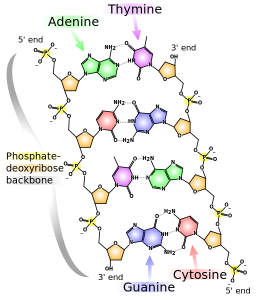
Poetic sequencing

All we need do is build

Good words on top of other good words.

Then we are changing our genetic

Code, evolving towards our better selves.514px-DNA_chemical_structure.svg

Leave a comment

Filed under creative solutions

for those of us who mourn

the delicate networks of our nerves

lie exposed to cold gusts of morning wind,

like the branches of so many trees

whose leaves have fallen to the frozen ground.


even so, silhouettes of twilight birds

try to find one another in song;

distant dark dots against the early gray sky,

they know to follow these choral connections.


they cry for food and love.

nature has schooled them to sing.

their cries are the sweetest sounds.

the morning sky is full of these songs.

bare trees 1

Bill Brown, 16 December 2012

5 Comments

Filed under creative solutions

spiritual water

A good friend’s mother died recently, and I offer this excerpt, realizing that its details do not necessarily match his individual experience.  The author powerfully captures a feeling that I wanted to share with him and others.

She died calmly; and her countenance expressed affection even in death.  I need not describe the feelings of those whose dearest ties are rent by that most irreparable evil, the void that presents itself to the soul, and the despair that is exhibited on the countenance.  It is so long before the mind can persuade itself that she, whom we saw every day, and whose very existence appeared a part of our own, can have departed for ever–that the brightness of a beloved eye can have been extinguished, and the sound of a voice so familiar, and dear to the ear, can be hushed, never more to be heard.  These are the reflections of the first days; but when the lapse of time proves the reality of the evil, then the actual bitterness of grief commences.  Yet from whom has not that rude hand rent away some dear connexions; and why should I describe a sorrow that all have felt, and must feel?  The time at length arrives, when grief is rather an indulgence than a necessity; and the smile that plays upon the lips, although it may be deemed a sacrilege, is not banished.  My mother was dead, but we had still duties which we ought to perform; we must continue our course with the rest, and learn to think ourselves fortunate, whilst one remains whom the spoiler has not seized.

Mary Shelley, Frankenstein, Vol.1 Ch.2

Mary Shelley understands the wrenching wrought by the death of someone we love.  I wanted my friend to see her paragraph, and to know that it helps me absorb some of the grief he and his family feel.

Lastly, in our backyard yesterday morning, I turned on the sprinkler.  Before it had made one full rotation, numerous birds flocked to the bushes being watered.  Their near-instanteous flight to the site reminds me of how thirsty we are for loving relationships.  Those relationships, which death alters without removing, are spiritual water.  They supply the well from which we daily drink.

Leave a comment

Filed under creative solutions