banking on growth, or helping seedlings sprout

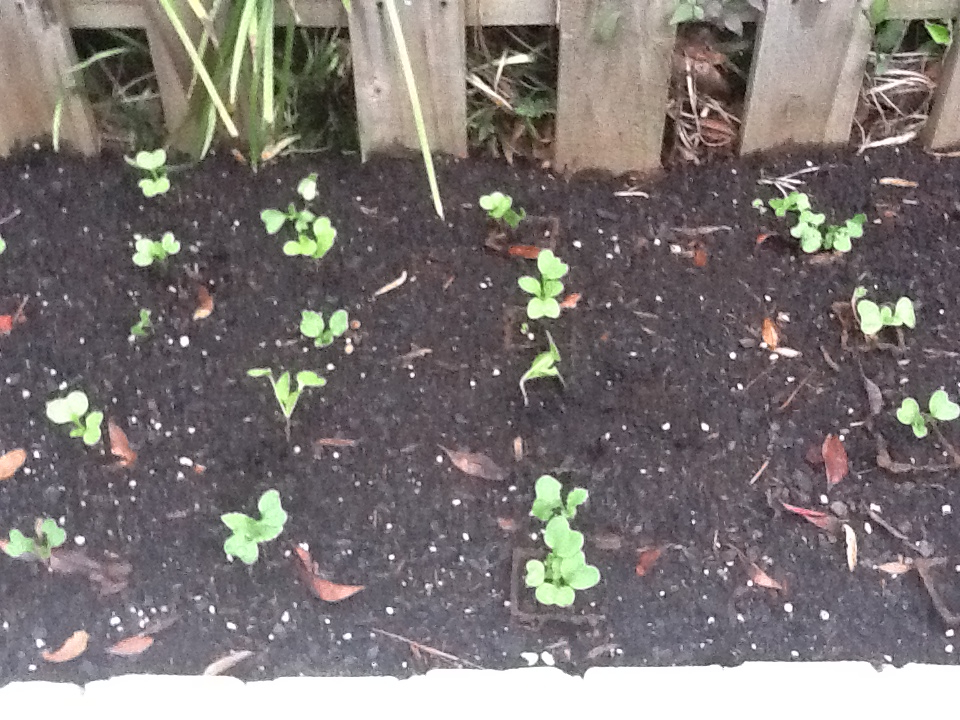
This morning before driving to work, I thinned out the radishes, again.  Several weeks ago, I started the seeds in small fibrous cells, letting them sprout in the house–on a tray and under a thin plastic sheet.  Once they were ready, I moved the seedlings outside to our wall garden.  More than once now, I have thinned them, so that just one plant grows in its own space.  Last summer, when we had less garden space, I discarded the thinned seedlings.  Now, with the newly prepared larger space, as I pull out and separate tiny strands of radish plants, I can walk them a few feet to my left–to open ground.  I enjoyed realizing that I did not have to waste these tiny plants.  They have potential to grow into full, pinkish red bulbs that eventually we can rinse, slice and eat.

associative leap (using as a connection the idea of not wasting potential)

Moving the slender plants this morning made me think of today’s school schedule.  The spring vacation starts after today, and, as in many schools, we struggle to make the day worthwhile.  We try to spend our time together productively, without wasting it.  I have occasionally told students that as I age, I become less interested in wasting time.  So today, in my sophomore classes, we did an exercise I had been imagining for some time, not sure when or how I would implement it.  I will briefly describe it, along with a few fun discoveries.

Basic exercise

As newly appointed interns in the US State Department, prepare a map (with four basic features) of the Dominican Republic for Secretary Clinton and the rest of her staff.  I can send you, readers of this blog, the one-page instructions, if you like.  For now, just know that we had just finished reading Julia Alvarez’s In the Time of the Butterflies, set in the DR during Trujillo’s oppressive thirty-year rule.

Several discoveries

1. As with most such exercises, the main challenge, especially the day before vacation, was to engage all group members in the map-making process.

2. As groups worked, I monitored progress with Photo Booth, an application on our MacBooks that let me film interactions in each group.  During the last five minutes, when I projected the video for everyone, I began to see this filming as a fun, natural way for the students and me to assess varying levels of collaboration within groups.  Also, I have a new tool for my assessing the kinds of questions they ask, and just as important, how I answer those questions.  Among today’s discoveries, this one excites me the most–partly because I have started reading a book about student questions and partly because I see a natural way to mix student engagement, technological tools and my own self-assessment.  The book, incidentally, is called Make Just One Change: Teach Students to Ask Their Own Questions and written by Rothstein and Santana (Harvard  Education Press, 2011).

3. The wording of the assignment’s instructions, appearing below a copy of the State Department’s official seal, gave me license to inject a realistic feel to my interactions with the students.  In my role as Special Assistant to Secretary Clinton, I could make sure they understood the need to work efficiently together.  State Department staff members often need to work on short notice.  They need to find, understand and communicate information with efficient collaboration.  I like to think that today, when some wish they could waste time, we had fun playing roles and learning more about another country.  As one of the team leaders was packing her backpack, she explained where the country’s two major airports are.  Out of genuine safety concerns, this student wanted to make sure that Secretary Clinton landed in an appropriate location.  You will have to believe me that this girl, on the day before spring break,  sounded as if she had suspended her disbelief.  Her imagination had taken her authentically into this assignment.  What a joy it was for me to hear her speak in this tone, in these terms.  We took one person’s potential and planted it in fresh soil.
2 Comments

Filed under beauty, challenge, creative solutions, empathy, expression, imagination, trust, work

empathetic models

Yes, we teachers are, or we have that potential.  In a recent department meeting, I described the three stars of my guiding constellation as imagination, empathy and expression.  A brief word here about the middle term.

Trust and fairness drive lasting relationships between students and teachers.  Incidentally, face to face contact fosters fairness and trust more readily than online communication.  This I believe.

To build trust and fairness, I try to write student assignments, or pieces of them, as often as I can.  Not only does this practice help me anticipate and reflect on their experience, but it also presents an empathetic model to them.  In other words, they see me walk in their shoes.  I can describe my own struggles and successes with the assignment.  Additionally, as in the sample below, I can use my work to show them tricks for theirs.

Yesterday, before they started writing on the topic of true character, I showed them my brief piece on a related passage from Hamlet, the story we are studying.  They were asked how Hamlet’s “rogue and peasant slave” soliloquy helps determine the level of his genuineness in telling Rosencrantz and Guildenstern that he has lost all of his mirth.  I projected, and posted online, my short analysis of the structure of this lost-mirth speech (2.2.278 ff.).  The sample also show students various ways to punctuate the inclusion of quotations.  Enjoy this draft–a draft, mind you.  To present empathetic models, we occasionally need to show drafts.  This reminds some students that we do not have to be perfect always.

Heaven and Earth: the structure of Hamlet’s lost-mirth speech

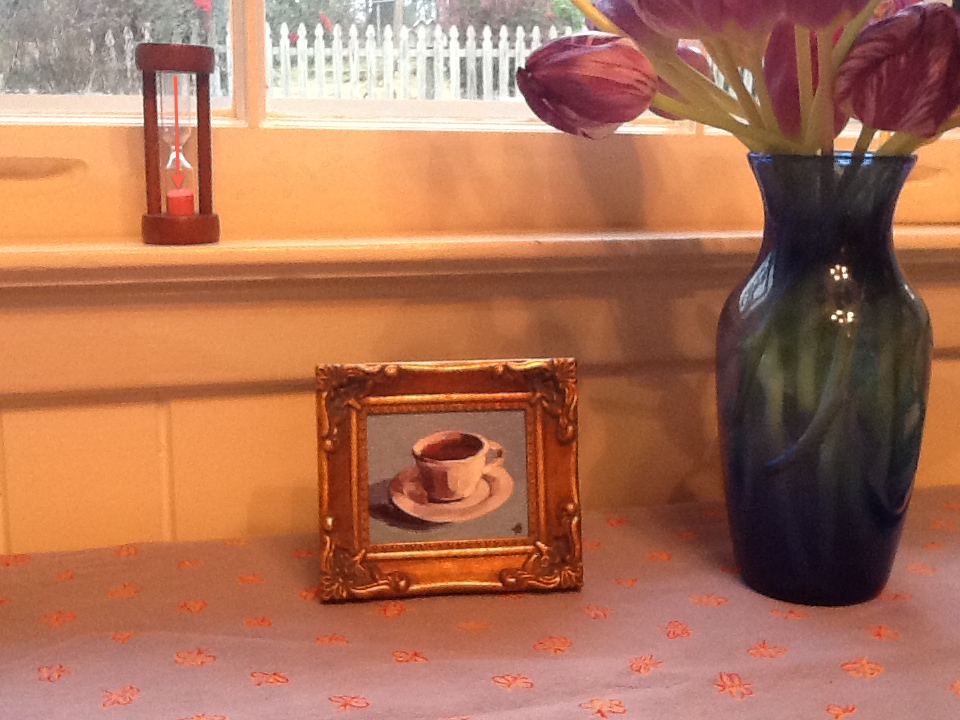
When Hamlet explains to R & G the likely reasons for their being sent by Claudius to test him, he structures his speech in an hourglass shape.  At the top of his speech, he begins with this broad (general) statement: “I have of late . . . lost all my mirth” (2.2.280).  From there he moves into a specific demonstration of this lost joy, in order to show how deep is his despair.  “This goodly frame, the earth” seems to him “a sterile promontory” (2.2.282-3).  In this section of the speech, he expounds on the beautiful majesty of the heavens.  This paean to the skies leads to the majesty of mankind.  Here lies the hinge.  As the lower part of the hourglass descends, Hamlet exclaims, “What a piece of work is man.  How noble in reason” (2.2.286-7).  As above, he finds several ways to express the glories of human beings.  Alas, at the bottom of the glass, he returns to another broad statement: “Man delights not me” (2.2.290).  Even this magnificent creature mankind brings him no joy; he can find no light in his dark world.  Everything has fallen to the bottom, where it lies still and sterile.

POSTSCRIPT:

In another class, students are examining specific ways in which Julia Alvarez humanizes the Mirabal sisters, legendary heroines in her Dominican novel, In the Time of the Butterflies.  More than one student has argued that showing a character in her moments of unguarded emotion brings her to life, down from her legendary pedestal.  Alvarez shows the sisters struggling to make decisions, reacting to making mistakes and needing to care for other people.  I believe that we humanize our teaching, and therefore the learning process, when we show students this side of us.  Projecting our version of an assignment can move us this direction.  To borrow from the Hamlet exercise above, such movement shows our true character, which, in turn, encourages students to do the same.  This seems like a fair exchange to me.

Leave a comment

Filed under challenge, creative solutions, empathy, expression, order, reasons for writing, trust, work

Laryngitis, Bronchitis, Senioritis

Sometimes in this blog I plant just seeds, while at other times I sow a seedling in the soil.  In the first case, a tiny seed goes in the dirt simply to start the process.  In the second case, a very young plant, with a stem and several leaves, settles into the prepared earth.

Today, I am plowing a miniature furrow with my finger to drop in a simple seed.

A local high school news broadcast last week ran a story about senioritis.  Like other valuable news features, it pushed me to ponder.  It made me wonder.

In her introduction, one of the student anchors called senioritis a “phantom disease.”  The reporter then characterized  this disease as a tendency for students to “stop putting effort” into their school work.  I have been wondering about the disease metaphor.

If  laryngitis steals your full voice and bronchitis inflames your lungs, what exactly does senioritis do?  More importantly, what causes it?  Laryngitis has multiple possible causes, and infection is responsible for bronchitis.  What lies behind cases of senioritis?

bronchitis

A student interviewed for the school broadcast summed up his understanding of the disease by asking “What’s the point?”  He said that once he had been accepted to colleges, he started wondering what was the point of his school work.  When I hear his summation, I am reminded of my earlier blog post called “Give ’em what for.”

A teacher interviewed for the story remarked that students showing symptoms of the phantom disease are “good kids,” by which he seems to mean that they are not putting in less effort out of any maliciousness.  When I hear this remark, I wonder about the real or imagined voices to which he is responding.  Who says or does things to suggest these are bad kids?  This same teacher said that his AP students have “no other option” but to keep working because of the upcoming test.  This idea makes me wonder about the rest of the students–i.e., those not taking AP tests in May.  What options do they have?  What motivates their work–after spring break or at any other time in their high school career?

Finally, because this simple seed is quickly sprouting leaves, I think of a plaque given to me by a friend.  A company in Kinsale, Ireland makes it.  They have cast in bronze and iron a statement made by Michelangelo, when he was 87:  “I am still learning.”  The combination of this plaque and the senioritis story makes me wonder where Michelangelo went to college.  I wonder what he did after receiving his acceptance letters.  I also wonder how he might answer the student’s question, “What’s the point?”

As a related postscript, I offer the following passage quoted by a facebook friend who noticed that Wendell Berry will deliver the 2012 Jefferson Lecture in the Humanities:

XXVI. The complexity of our present trouble suggests as never before that we need to change our present concept of education. Education is not properly an industry, and its proper use is not to serve industries, either by job-training or by industry-subsidized research. It’s proper use is to enable citizens to live lives that are economically, politically, socially, and culturally responsible. This cannot be done by gathering or “accessing” what we now call “information” – which is to say facts without context and therefore without priority. A proper education enables young people to put their lives in order, which means knowing what things are more important than other things; it means putting first things first.

(from Wendell Berry’s essay, “Thoughts in the Presence of Fear,” in the Autumn 2011 issue of Orion magazine)

photo credit: http://img.webmd.com/dtmcms/live/webmd/consumer_assets/site_images/articles/health_tools/bronchitis_slideshow/webmd_composite_image_of_bronchitis.jpg

73 Comments

Filed under creative solutions

stars, squirrels and birds

Since I am cleaning house and grading papers, I will make this short.

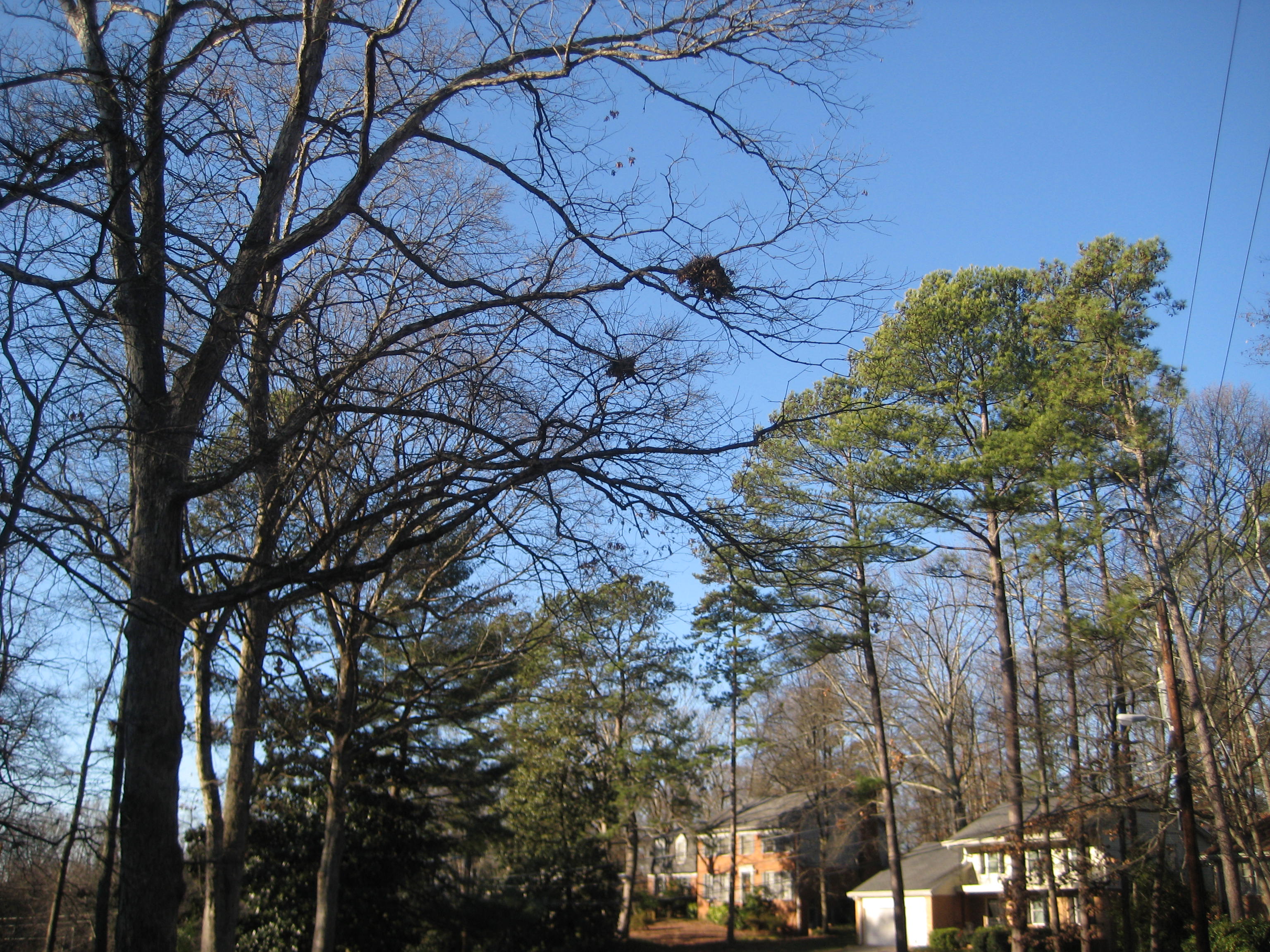
This morning, while walking our dog–incidentally, I recommend walking with or without a four-legged friend–I saw several squirrel nests high up in the bare winter trees.  The squirrels wedge sticks and leaves into the junction of multiple branches.  Usually they need just three to start.

This idea of building on a foundation of three reminded me of an earlier post about constellations.  I proposed that teachers talk with each other about the three guiding stars of their work.

Then–meaning this morning– my balloon of a mind drifted to a memory of a bird’s nest I saw while visiting family in North Carolina last month.  In an eight-foot dogwood, a bird had added a small twig to form a triangle.  Part way out on one of the young tree’s branches, a “Y” had formed.  This bird, knowing the strength of triangles, lay his twig across to form an equilateral.  On that foundation, he placed the pine needles, oak leaves and plastic bits of his nest.

I suppose it’s just simply fun sometimes to notice such connections.

In addition, frameworks–conceptual, celestial or domestic–help us two-leggeds and four-leggeds to build things.

3 Comments

Filed under beauty, challenge, creative solutions, order

Seeing the Stars from a Submarine

In a section of his most recent book, Through the Year with Jimmy Carter, President Carter writes about the symbol of light.  He begins by explaining the importance of the stars to him and his navy crew aboard a submarine.  I was struck by the paradox of navigating by stars while deep under water, before my brain realized the solution:  the submarine must surface to see the stars.

This paradox reminds me of how I sometimes feel as a classroom teacher, looking for dependable guidance while submerged in daily activities. (Not to mention coming up for air.)  At regular intervals, I must surface to use the sextant, if I want to remain safely on course.  President Carter describes the navigational details for people, like me, who need reminding.  He finds three stars, and measures their altitude.  From these measurements, he ascertains his ship’s position on the map.

This description makes me wonder by what three stars I measure my course, and the course of the various groups of students with whom I work each year. Enter Robert Evans, whose recent article in Independent School magazine—shown to me by a generous colleague—describes concrete ways in which teachers can move their professional exchanges from congenial to collegial.  Among his suggested vehicles for such exchanges is the time-tested Critical Friends Groups (CFG).  In other schools, I have participated in such professional in-school groups and found them productive.

President Carter’s chapter about light helps me imagine a particular kind of CFG—one centered on the participants’ three guiding stars.  How does each group member find his or her three stars?  What are those stars?  And how, in terms of students’ daily experiences and accumulated learning, do the adults ascertain their position on the map?  I think of this professional proposal as a Constellation of Colleagues.  We often encounter published frameworks, grids and tables of principles, outcomes and designs.  As helpful as these have been for me and for students over the years, I think it could be fun and productive to explore a natural version, which grows from the participants’ finding, describing and using their own three stars.  When you look to the sky for guidance, what do you use?  Ideally, individuals’ three stars align with the school’s official stars.  Where they do not, people have an opportunity for meaningful discussion.  One advantage to this Constellation of Colleagues idea is that it can cut across traditional disciplines.  People of various backgrounds, interests and training can gather to share basic values.  They can even, as a final creative project, draw and name their group’s constellation.

Leave a comment

Filed under beauty, challenge, creative solutions, expression, order, reasons for writing, trust, work

Give ’em what for

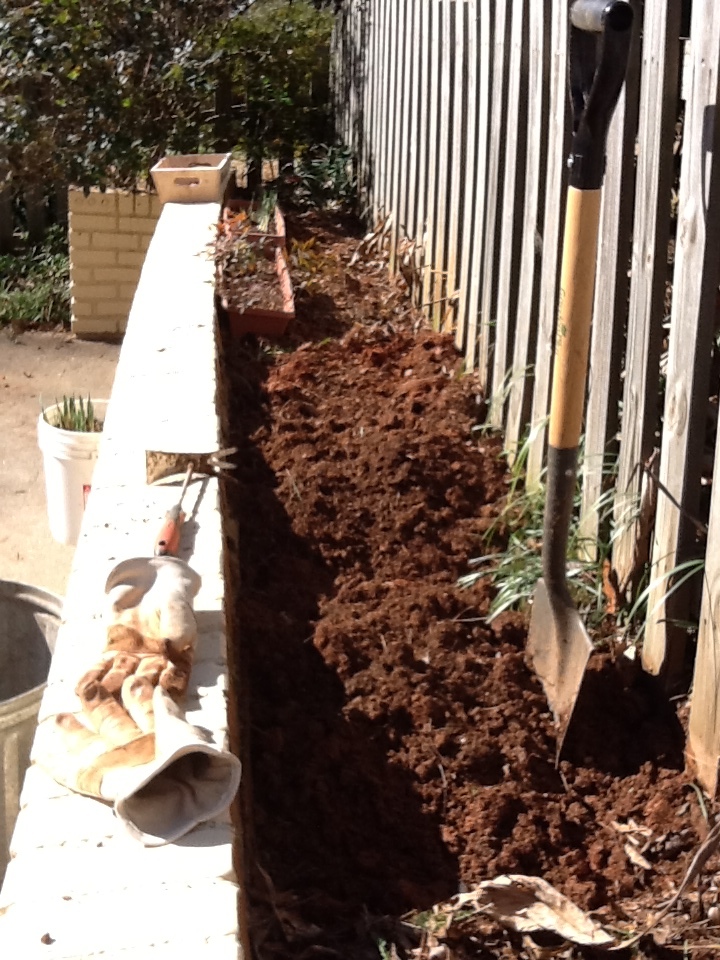
Yesterday I worked the soil some more in our “wall garden.”  The sun warmed my back, while I dug up old cannas and encroaching crab grass–to make way for tomatoes.  Some readers may know that my beta blog’s subtitle read “planting thoughts about poetry, education and writing instruction.”  Planting and growing continue as valuable metaphors for my work with students.  For example, if students are to grow in learning, we adults must help prepare the soil.  We have to turn the earth over.  We must make sure it has enough air and nutrients.  The seeds need hospitable conditions, not to mention monitoring.

associative leap

This past Friday, in honor of today’s national holiday, students worked with Dr. King’s “Christmas Sermon on Peace,” first delivered in 1967 from Ebenezer Church here in Atlanta.  After they had read the speech to each other in small groups, proceeding section by section, they rendered one of the speech’s main ideas visually.  As a fun extra, they kept to themselves which idea they were representing, in abstract or representational style, so that classmates could later try to guess the subject.  At the end of the day, I taped the images to the large window that spans one of the classroom’s four walls.  The result is a kind of visual speech by Dr. King, which we now can see each time we look out towards the world beyond the classroom.  The images not only represent Dr. King’s ideas, but also the ideas that particularly resonate with each individual.  No idea went un-illustrated.  Again in honor of today’s national holiday, especially for those who may not know this sermon, I am listing the labels that I taped above each group of student images, from left to right across the window:

If we are to have peace on earth,

our loyalties must become ecumenical . . .

as nations and individuals,

we are interdependent . . .

all life is interrelated.

. . .  if we are to have peace in the world,

. . . ends and means must cohere . . .

the means represent the seed

and the end represents the tree.

 . . .  the nonviolent affirmation

of the sacredness of all human life. . .

When we truly believe in the sacredness

Of human personality, we won’t exploit people,

We won’t trample over people

With the iron feet of oppression,

We won’t kill anybody.

If there is to be peace on earth

And good will toward men,

We must finally believe in

The ultimate morality of the universe

I still have a dream . . .

SO, I often think of teaching and learning as centered on preparing the soil.  What are we growing, for whom, and for what purpose?  In other words, give ’em (the students) what for.  Why are we doing what we’re doing?  Dr. King’s speech centers on the “conditions for peace.”  What kind of soil does peace need, at the individual and community levels? His speech addresses conditions necessary for the international community.  Much of what we teachers do with students, and for students, involves preparing the soil.  I can think of few things I would rather be doing with my time, what Mary Oliver calls this precious day, than working the soil, preparing to grow something that feeds people–today and tomorrow.

Peace, everyone.

preparing the soil

3 Comments

Filed under creative solutions

what if?

In Wendel Berry’s Leavings (Berkeley: Counterpoint, 2010), his poem “IV” appears in the section called “2008.”  It sparked a series of associated thoughts.  First, his poem.

A man is walking in a field

and everywhere at his feet

in the shortgrass of April

the small purple violets

are in bloom.  As the man walks

the ground drops away,

the sunlight of day becomes

a sort of darkness in which

the lights of the flowers rise

up around him like

fireflies or stars in a sort

of sky through which he walks.

This poem reminds me of  Cree stories from the northern parts of the Americas.  I first learned about these stories from Howard Norman’s collection, Wishing Bone Cycle: Narrative Poems of the Swampy Cree.  Like those wishing bone poems, Berry’s piece turns an observation on its head by making the purple violets into sparkling stars.  By grabbing the flower and planting its negative, he lets us walk with the man in the sky.  He lifts us to new terrain full of previously unimagined possibilities.  Besides being fun, these transformations exercise the imagination–of creator and audience alike.

In days of personal or public depression, when individuals or groups can feel overwhelmed, the value of imagination grows.  What if?  Let’s just imagine. Although it sounds simple, some people lack the imaginative muscle.  For one reason or another, it has atrophied, which makes it hard for them to imagine circumstances as other than they are.  By itself, imagination does not solve all problems.  Can it help touch on a possibility?  No doubt.  Can it turn an earth-bound flower into a star of light?  Sometimes.

Helping students imagine the created world of a poem or a fictional character exercises this important muscle.  In a world that people say is changing at an ever-increasing rate, the ones with strong imagination can be more prepared for change, and more able to help the rest of us navigate it with compassion.


2 Comments

Filed under art, challenge, creative solutions

walking thoughts

Someone, it may have been my brother who lives in Colorado, introduced me “walking rain.”  When you look at a stretch of the plains in eastern Colorado, for example, you sometimes–at a distance–see sheets of slanted gray-blue rain sweeping across the grass.  From sky to ground, this rain walks across the open space.

Often when I walk our dog, here in greater Atlanta, thoughts occur to me.  I  call these walking thoughts.  They sweep across my mind, somewhat like the sheets of rain.

These thoughts also bubble up, perhaps like gas through a hole in Alaskan ice (see today’s NYTimes article about methane’s escaping from decayed plant matter at the bottom of ancient lakes).  One bubble gives rise to others through association.  For example, on this morning’s walk, our dog spotted a squirrel.  Sensing the dog’s attention, the squirrel climbed the nearest telephone pole, then ran across on a wire just wider than a #2 pencil.  Thirty feet above us, he made his way across with remarkable balance.

associative leap

The idea of balance brought to mind a particular book about the golden mean.  My step-son gave me the book, after he had finished reading it.  Ever since that gift, I have wanted to sit down and read it, too.  The book still sits unread on the shelf.

leap

Sabbatical idea: take a year, or just part of a year, to read this and other unread books from our shelves.  Although technically I am now eligible for five sabbaticals, I would happily read my way through just one.  I won’t list the sabbatical reading here, but will say it covers a number of volumes and a range of genres.  For the time being, I simply enjoy imagining the prospect during my walking thoughts.

p.s. For more on associative thinking, if you like,  see an earlier post, called “Wired for Poetry.”    Happy walking.

2 Comments

Filed under creative solutions, reasons for writing

literature: super-collider

In the first of my #twittertuesdays @bllbrwn423–a weekly series on tweeking writing–I quote from a novel called The Book Thief.  Liesel, the young female protagonist, finds the first of many gifts in a discarded, deflated soccer ball.

leap

Today’s New York Times reports that teams of scientists have observed a “striking bump” in the data from their colliding particles.  The “suspicious bumps” have become “striking bumps.”  This sub-atomic categorical movement, this small gift, has produced a “tantalizing hint” of the existence of the Higgs Boson, which some call the God particle.

This recent scientific news story intrigues me for all kinds of reasons.  For example, what is the elusive sub-atomic particle at the base of effective, enduring teaching and learning?  Today, however, it intrigues me because I see students in literature study as teams of interpreters.  When particular matter collides in a novel like Frankenstein, for example, how do these students make sense of the resulting material, or the material results?  When Mary Shelley designs her experiment to collide creator and creature, how do these teams of young minds interpret the results?

For example, does Victor Frankenstein’s world of pains transform him from “an Intelligence” into “a Soul”?  Students wrote answers to this question, based on a letter from John Keats to his brother George, as practice for their recent semester examination.  On the exam itself, they agreed or disagreed with the proposition that, unlike Beowulf, Mary Shelley’s novel blurs the lines between protagonist and the “monster.”     Having stated their position, they  explained their claim’s effect on an understanding of the term “monster.”

As a last thought, I cannot help but observe that much of Mary Shelley’s fanciful story orbits around Geneva, home to the noteworthy super-collider that is producing “striking bumps” and “tantalizing hints”–small gifts all, the first of many.

2 Comments

Filed under art, beauty, challenge, reasons for writing, work

Trusting Students

In today’s New York Times, we learn about a poetry assembly at Horace Mann School.  If interested, I suggest you follow up by reading two student opinion pieces in the school’s online newspaper, The Horace Mann Record.  Esther Ademola wrote one, and  Katie Bartel wrote the other.  Both writings remind us to trust students to be courageous, compassionate and intelligent.  Not all students maintain our trust (nor do we always earn theirs), but many of them do.   These two students at Horace Mann show us how to make distinctions.  They can think, and write, with discernment.  We adults should likewise.  Not all students are the same, but we should trust the potential in each individual.

2 Comments

Filed under trust