homegrown haiku 4

Talking together

              Here and now makes a difference

                             Over many years

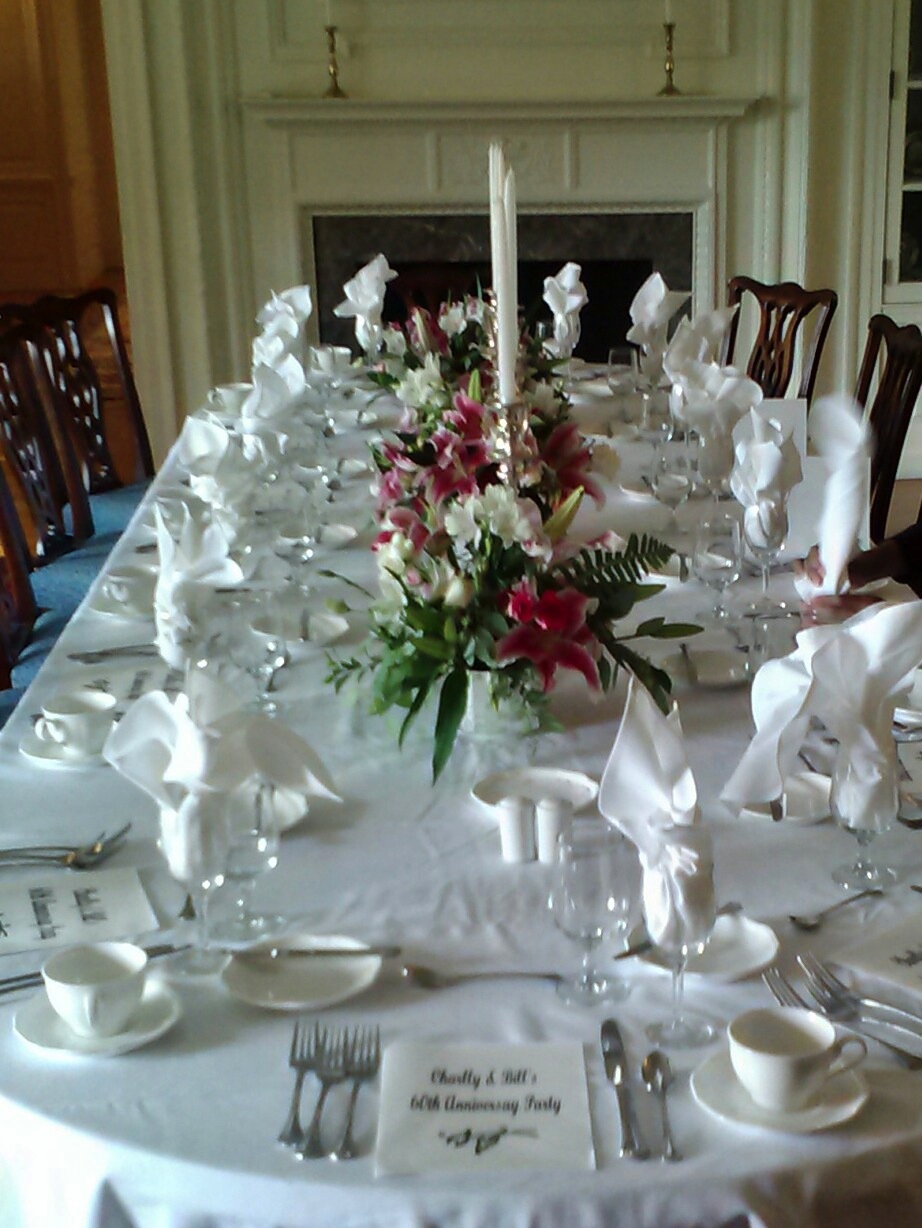
This haiku grows straight from a conversation with my wife shortly before the anniversary dinner.  Since the dinner celebrates a marriage, the impulse for this haiku fits.  Although some couples talk more than we do and some less, I value our ability to communicate openly and often.  Therefore, the first line represents the object of my appreciation.

In another run-on, an effect which I am starting to enjoy in haiku, the second line extends the general process to the present moment, making the abstract concrete.  Sometimes talking with your partner is difficult, awkward or even scary, but, in my experience, always valuable.  The reference to “here and now” grounds the lofty idea of communication.  Talk here and now, rather than wait for a “better” time–this is the spirit of line two’s opening.  Then, as it happens (I love the surprises that surface from composing, and from reflecting), the second half of line two not only completes the specific thought that conversation in the present matters, but it also produces an independent line two that says, “what you do now matters.”  This independent line creates a nice symmetry because it returns the poem to a general level.

Line three, then, moves back to the specific occasion of a sixtieth anniversary–with the phrase “for many years.”  While reminding us of this particular celebration, the last line also describes the accumulated value of openly communicating in the present.  The present is also the future.

Unlike the other haiku so far, this one has no central image–from nature or anywhere else.  In this sense, the poem stays more abstract than the others.  This feature may explain why I spend time noticing the layers of generality.  The experience of talking does not inherently produce a memorable concrete image; it is almost like live theatre, insofar as you have the conversation, then you have your memories of it and your associations with it.  The event itself has passed; only the impact and meaning remain.    In a way, this haiku #4 holds my memory of that conversation between me and my wife, Ann.  In particular, it captures my appreciation that we can have such talks, over many years.
 

Leave a comment

Filed under creative solutions

homegrown haiku 3

Window PanelA close friend looks in

              From outside the window pane

                             Wishing to see love

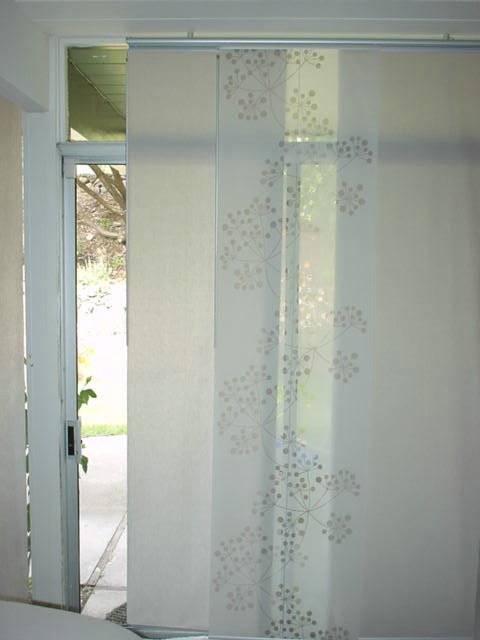
This haiku comes from a dream–a dream of some substance because it arrived just three nights before my parents’ anniversary dinner.  In this vision, a man stood outside a set of patio doors.  He peered through the sheer curtains that covered each door’s two columns of six panes, from the inside.  As I watched him wish he could pull the curtains gently apart, I saw that he was a close friend of parents, especially of my father because he and his twin brother had been born on the same day as my father and his identical twin.  My parents had known this friend for a long time; they loved to laugh with him.  I remember laughing with him, too; he always worked to include me and other children nearby.  If I had ever dreamed of David before, I didn’t remember it.  So, he, effectively for the first time in my life, appears in a dream.  He wants to be part of my parents’ celebration, but can’t.

The feeling of David’s longing lies at the heart of the dream and therefore fuels the haiku.  My initial impulse was to write a poem that brought my parents’ friend to the table.  As I wrote, though, I began to see not only that David wanted to join the celebration, and thereby be connected to old friends and the experience of love, but also that everyone else at the table had some relationship to his feelings.  All of us, for various reasons and to different degrees, have experienced and desired love–love for a companion and love from such another.

The poem’s middle line, by referring to a “window pane,” echoes the hurt that comes from feeling outside the experience of love.  Many of us around the table have known, either first-hand or second-hand, directly or empathetically, the feeling of being  outside of the patio window looking in.

And this feeling helps explain my choice of “wishing” in the last line.  I may have tried “wanting” or a similar two-syllable verb, but “wishing” captures the  spirit of David’s longing.  A wish is a kind of dream.  What I wish for is what I dream of.  So then, David’s wishing to be part of the marriage celebration becomes my dream, too.  In this way, what he wants is what I want.  As it happens, then, he does join the table–in a real sense, a sense that began with a dream but became more than that.

photo credit: http://www.eichlerforsale.com/xsites/Agents/eichlerforsale/content/uploadedFiles/Window%20Panel.JPG

Leave a comment

Filed under challenge, empathy, imagination

home-grown haiku 2

tableAnniversary

arrangements crawling with ants

life is everywhere

This is a zen haiku–because of the ants and the poem’s perception of them. (I use the popular, rather than the faithful, sense of the word “zen.”)

The syllables of the first line fit nicely.  In addition, as in the previous haiku, the first line runs on to the second.  The first line’s label stands alone, as an announcement of the event.  At the same time, it marries the next word in the next line.  This marriage signifies the flower arrangements seen in the attached photo.  Our mother arranged these flowers, as she has been doing professionally and personally for many years.  She loves finding the colors, shapes and sizes that fit the occasion and the table.  Some of my enjoyment in arranging words surely comes from her artistry.  As we tried out these several arrangements  the morning of the dinner, little black ants began emerging from the vases.  We tried brushing them away, squashing an occasional one, but they kept coming, kept crawling out of the ferns and flowers.  We decided to set the vases aside until evening, so that the insects could get their exercise somewhere other than on the dinner table.  As it happens, our plan worked.  The dinner was ant-free, as far as we could see.  The  image, though, stayed with me and crawled into line two of this haiku.  Yes, the ants appeared to spoil the table that morning, but this is my favorite line of the poem.  The phrase “crawling with ants” we hear often, and it fits here because it describes what we saw.  At the same time, the whole line captures the larger idea of arranging or planning anything, only to be disturbed by an unexpected presence.  The word “crawling” does not exactly match the number of little black feet parading across the table cloth–we saw an ant here and there–but it captures the oh-no feeling we had.

The last line, I used to think,  is my least favorite because it seems vacuous.  What does it mean, if anything?  The line actually grew from my wife’s suggestion that we move the vases aside that morning.  Her idea reflects the poem’s zen element.  If the arrangement is causing problems where it sits now, move it over and give it time.   To quote a favorite statement of hers, “If something is not working, change it.”  The ants, as the only concrete image, anchor the poem.  Flanked by an abstract label and an empty statement, their line moves the poem forward.  (Outside the poem, my wife’s suggestion brought a sensible, productive pause into the morning by recognizing the ants’ energy and moving it to another spot.)  This last, seemingly meaningless, line, though, invites an appreciation for all life, even the challenging parts.  This invitation suits the occasion of a marriage that has lasted sixty years.

Leave a comment

Filed under art, challenge, creative solutions, order

home-grown haiku 1

For my parents’ sixtieth wedding anniversary, I wrote several haiku to honor the event.  Since several of them need  explanation, which I gave during the anniversary dinner, I  offer that background here–for people who could not attend the dinner, for myself as writer, and for anyone else looking in.  While these posts repeat some of my impromptu comments, they also include thoughts surfacing since the dinner.

In the order of original composition (15 June 2013), here’s the first one:

Two together still

              Moving furniture pieces

                             To where they belong

Many who know me also know that my parents recently moved after having lived in the same house for fifty years, the house in which I grew up from age nine through high school.  Changing homes after that much time is hard, in several ways.  For example, it tests the relationship between those who are making the change.  This test is reflected in the first line.  The word “still” carries the idea of sixty years, which includes the recent struggle of picking up, packing up and re-locating.  The same word also means calm, as in “Before the sun rose that morning, the lake was as still as glass.”  Placing the word “still” at the end of the  haiku’s line reveals this second meaning more effectively than would, for example,  “Two still together.”

Although part of a haiku’s challenge is to create a total poem while allowing each line to read independently, as a kind of mini-poem,  I enjoy the run-on (spill-over) effect of “still / moving furniture,” which is what my parents were doing on the day of the anniversary dinner.  So, the stillness suggested in the first line contrasts in several ways with the lifting, carrying, placing, transporting and other move-related activities.

The third line, then, echoes the initial suggestion of stillness by claiming that things are as they should be, are where they belong, need no more moving.  The move that looked daunting several years ago has put in place not only furniture pieces, but also the realization that change is often both hard and rewarding.  Such realizations come more readily, when we can share the struggles and rewards with someone we love.

2 Comments

Filed under challenge, creative solutions, discovery, order

haiku meditation: vowel-consonant collaboration

http://farm3.staticflickr.com/2120/1883564903_1a7fb38115_z.jpg

Tumbling upstream

against the racing current–

a white downy seed.

–J. W. Hackett, Haiku Poetry: Volume Two

My favorite line is the first because of the “u” sound and its collaboration with the “mb” in “tumbling” and “p” in “upstream.”  These combinations repeat the darker gurgling sounds of creek currents–that sound that occasionally bubbles up from underneath, bringing to the surface nutrients that lie below.

Line two continues the mystery of what can “tumble” against such a current, in part because I imagine tumbling as a grounded movement involving traction, or a movement of powerful muscles like those of the salmon.

Line three belies the idea of traction because the unseen wind is sending the seed upstream.  The seed is tumbling against, but the “against” is nominal and abstract.  Yes, this dandelion seed is traveling in the opposite direction, but not  with any traction per se.  It skips, like the slender stone I used to throw across the stream behind my grandparents’ house.

Also, in this third and last line the impact of the “u” sound returns.  Whereas the grounded tumbling starts the poem, a whispy white featheriness ends it. The “wh” combines with a long “i,” and the “w” in “downy” repeats this slight consonant.  Like “i” in “white,” the long “e” in “seed” gives this line a higher, airier feel; it sings soprano to the first line’s base notes.  It lifts the poem out of its initial mystery, sending the seed to land who knows where.

Yes, the current of water is “racing,” yet the slight seed moves against it even so.


photo credit: http://farm3.staticflickr.com/2120/1883564903_1a7fb38115_z.jpg


Leave a comment

Filed under art, beauty, challenge, creative solutions

choosing haiku verbs

http://images.google.com/search?site=&tbm=isch&source=hp&biw=1066&bih=544&q=creeks+and+sun&oq=creeks+and+sun&gs_l=img.3...1539.8368.0.9115.14.14.0.0.0.0.114.987.11j2.13.0...0.0...1ac.1.16.img.ZlZgOOCshPk#facrc=_&imgrc=-YFmrmYIrM9U6M%3A%3BxxLJTrJc-SREJM%3Bhttp%253A%252F%252Ffarm5.static.flickr.com%252F4124%252F5061612905_50bc56dd0e.jpg%3Bhttp%253A%252F%252Famericanadventurist.com%252FForum%252Fshowthread.php%253F89-ARSES-Tionesta-Creek-Float-Cancelled-due-to-Weather%3B375%3B500

Sun plays on the stream

and reflects on every tree

its shimmering dance.

–J. W. Hackett (Haiku Poetry: Volume Two, Japan Publications, 1968)

I want to help students choose valuable verbs, and I see guided practice with haiku as a way to aid them–a fun way to challenge young writers in this poetic microclimate, where choice especially matters  because of the tight-fitting form.

For example, I see the first verb in Hackett’s haiku.  What else might work in place of “play,” I can ask students.  What does this verb give us, by way of description and potential?  What does it mean, and how can we build on it, with it?

A note on adjectives: when recording this haiku from (imperfect) memory, I wrote “brilliant” in the last line.  This mistake shows me the value of “shimmering” because it includes the movement implied in “play,” as well as the brilliant reflections.

Therefore, as students, including myself, sharpen a verb, they build a skill that transfers across parts of speech.  In turn, they can more clearly see connections among elements of their descriptions.  They open themselves and readers to ever-more-shimmering sentences.


photo credit: http://farm5.static.flickr.com/4124/5061612905_50bc56dd0e.jpg


Leave a comment

Filed under art, beauty, challenge

“And at times the fact of his absence will hit you like a blow to the chest, and you will weep.”

A family tribute to our good friend who died suddenly several days ago.

“And at times the fact of his absence will hit you like a blow to the chest, and you will weep.”.

Leave a comment

Filed under art, beauty, creative solutions, expression, joy, work

poem for a friend on his birthday

As a young boy, he clutched a book about Mickey Mantle,

in the car outside the doctor’s office.  He held on,

as if it were a Louisville slugger, and his grandfather

called him Homer, for his legendary hit in little league.

He never finished reading–the book kept eluding his grasp.

He remembers loving the feeling of almost gaining

momentum with this man’s story–he was such a force,

so comforting in his own mesmerizing way.

Now, a teacher meets young flustered faces in the hallway.

He stops to hear  their stories, tries to grasp their worries,

comforting them, with his own watchful eye

on the ball coming anxiously across his plate.

The little boy will understand some day what it means

to read a story to the end; in the meantime, he has a teacher.

Leave a comment

Filed under creative solutions

Teaching Emotional Topics

This piece, among other benefits, reinforces the valuable role of students’ prior knowledge, especially with emotional subjects like yesterday’s bombing in Boston.

Steve Goldberg's avatarWhat I Learned Today

We will start our days at TLC Middle School by reading the day’s news.  Today, the main story is obvious — what happened at the Boston Marathon?

This was an awful raw event, and my thoughts and prayers are with the people of Boston, my home town. Thankfully, all of my family and friends are accounted for and safe — but it’s been a gut-wrenching 24 hours.

As of mid-day on Tuesday, April 16, we don’t know a lot beyond these basics, from the Boston Globe: two bombs went off near the finish line of the Marathon; three people have been killed; more than 170 have been injured, and 17 are in critical condition.

A lesson I learned as a young teacher 15 years ago is that it’s crucial, before starting a discussion with student about an emotional topic such as this one, to see if any students in…

View original post 1,523 more words

Leave a comment

Filed under creative solutions

Initial thoughts: Preface and first 2 chapters

As part of an experimental month-long “biography unit,” in which seniors choose someone else’s life to read about, this student has already drawn inspiration from her chosen book, and, in the process, shown me what’s possible when young adults play a significant role in designing their curriculum.  This post reinforces my belief that with their help, we can find ways for  high school seniors to make meaningful use of their waning weeks.

krispykreme101's avatarkrispykreme101

In the preface of the book, the authors give an explanation as to how they came to write the biography. Initially, they said, they were just going to write a book that included information about her missionary work, only to realize that she was a book unto herself. In 1968, they attended a church service in Germany. The authors listened to two speakers who had both been prisoners in a Nazi concentration camp. They note that the first speaker, understandably, showed the deep pain that he not only felt then but continues to feel in his everyday life. The second speaker, Corrie, they said, “radiated love, peace and joy”, words that I would not have imagined to describe someone who had gone through what someone like herself had. The authors, so taken aback by her spirit, stayed behind afterwards and talked to her. They learned that Corrie was spending her…

View original post 313 more words

Leave a comment

Filed under creative solutions